Cleaning robot navigation sounds technical, but the core idea is simple: the machine builds its own map of your building and uses its sensors to stay located within it. Understanding how that works clears up the most common myths, including the big one, that a robot needs perfect Wi-Fi to move. Here is what is actually going on.
The robot does not drive on Wi-Fi
This is the misconception worth clearing up first. The map lives on the robot, and it navigates from that map and its sensors, not from the cloud. If the internet goes down, the robot keeps cleaning. Wi-Fi is how it talks to you, reporting status and uploading its coverage data, not how it sees. A dead zone costs you visibility, not cleaning.
LiDAR and visual sensing, working together
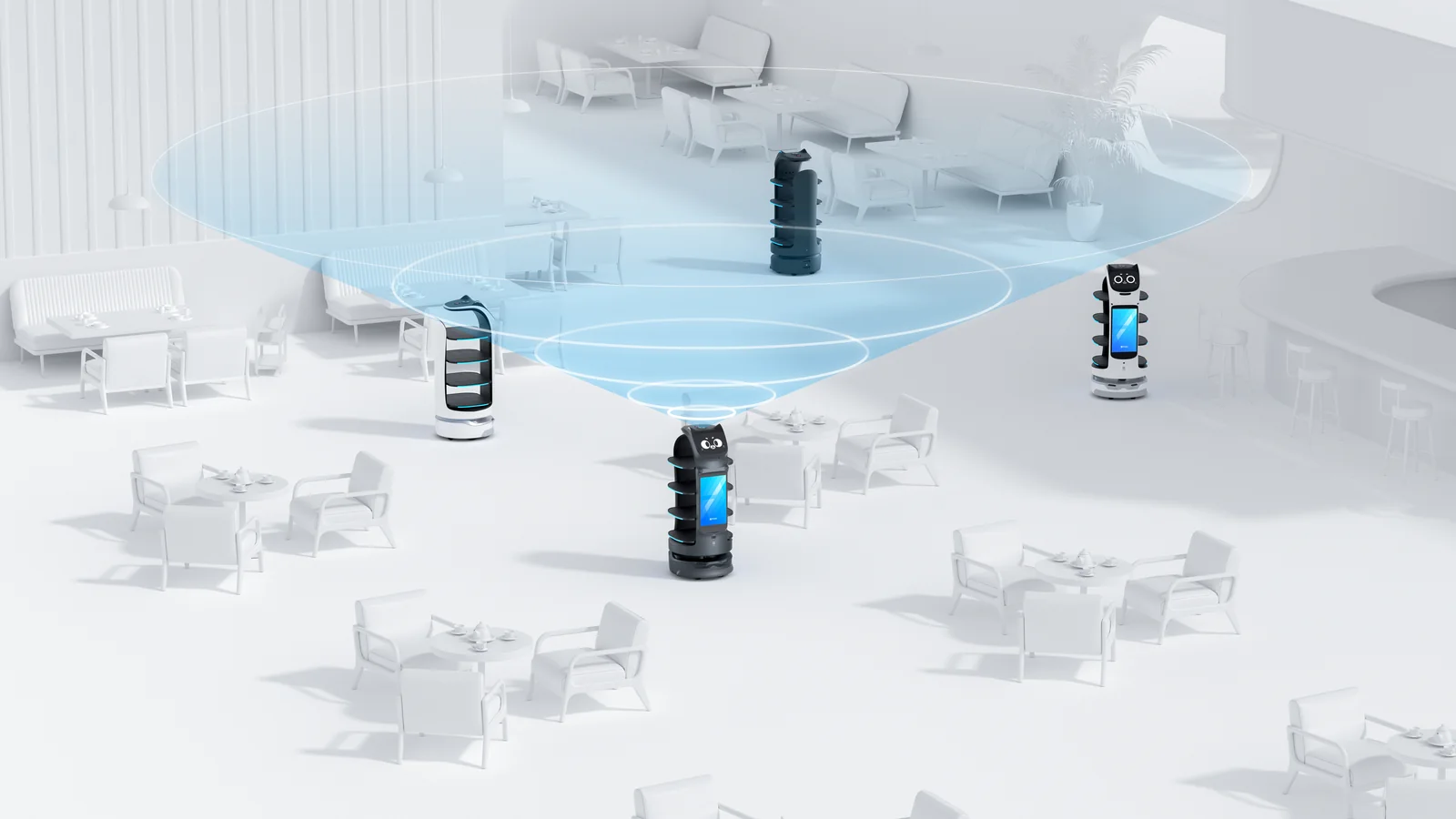
The CC1 Pro combines LiDAR, which measures distances with light to map walls and spaces, with visual fusion VSLAM, which uses cameras to recognize and match its surroundings. Using both is what gives it reliable positioning. Where one method struggles, the other compensates, which is the whole point of combining them rather than relying on a single sensor.
No markers required
Because it maps for itself, the CC1 Pro does not need QR codes or floor markers laid down in advance. It builds its own three dimensional map on the first pass and cleans to that map every cycle afterward. That is what lets it be introduced into a live, occupied space with minimal preparation.
Tricky spaces, and how they are handled
Some environments are genuinely hard for any robot: long featureless corridors, halls of glass where laser sensing struggles to find a reference. In these spaces the visual side of the system helps where laser alone would falter. We identify these areas during the site audit and the mapping process, so the robot is set up to handle them rather than discovering them live.
Why this matters for deployment
Navigation that maps for itself and works offline is what makes a robot practical in a real building rather than a controlled demo. It is why the machine can run overnight in a basement corridor with no signal, and why it can start work without weeks of facility preparation. This connects directly to how we map a facility and to the safety systems that let it work near people.
Frequently asked questions
Does the cleaning robot drive using Wi-Fi?
No. It navigates from its on board map and sensors. Wi-Fi is for monitoring and reporting.
What happens in a glass walled space?
Its visual sensing helps where laser alone struggles. We flag tricky spaces during the audit.