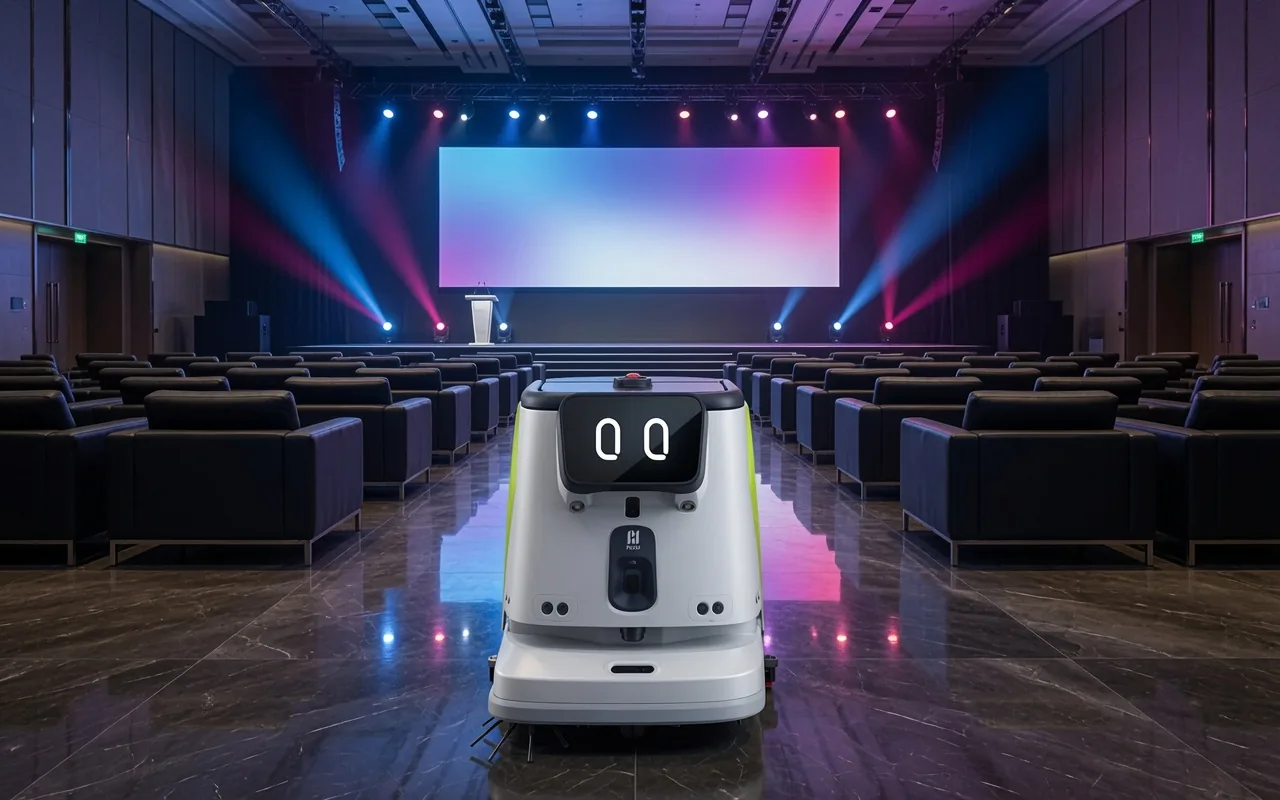
Facility mapping for a cleaning robot is where a smooth deployment is really won or lost. The machine can only clean as well as the map it is working from, and a good map accounts for the specific quirks of your building. Here is what goes into mapping a facility properly, and why the details matter.
Facility mapping for a cleaning robot: floor transitions
The places where one surface meets another, marble to carpet, tile to a metal threshold, are where a poorly mapped robot tends to hesitate or error out. During mapping we identify these transitions and tune how the robot approaches them, so a spot that might otherwise cause a daily rescue becomes a non issue. Often a small physical adjustment plus a mapping tweak is all it takes.
Vertical mapping: the elevator
For multi floor sites, mapping includes setting up autonomous elevator use. With the Elevator IoT Module, the robot can call the car, wait for the doors, and select the correct floor, then switch to that floor's map on arrival. Crucially, if it sees a full car it waits for the next one rather than crowding in. Your staff should never be pressing buttons for the robot, and proper mapping is what makes that true.
Working offline
Plenty of buildings have connectivity dead zones, basements, thick concrete cores, far corners. Because the map lives on the robot rather than in the cloud, it keeps cleaning through these zones without missing a beat. It simply continues its route and uploads its data once it is back in signal. Mapping accounts for these areas so the robot's behavior is predictable throughout.
Map quality is a real thing
A first pass map captures temporary clutter too, a delivery cart, a stack of boxes. Part of good mapping is cleaning up that noise afterward, so the robot is not forever swerving around an obstacle that is no longer there. A tidy map means smoother, more confident cleaning.
Why this is experience work
None of this is difficult, but it benefits from having done it before. Knowing which transitions will cause trouble, where to expect dead zones, and how to tune a map for reliable daily running is the difference between a robot that just works and one that needs babysitting. It connects directly to site readiness beforehand and to how the robot navigates day to day.
Frequently asked questions
Will the cleaning robot work in a basement with no Wi-Fi?
Yes. It cleans and navigates from its on board map. You simply will not see its live location until it returns to signal.
Do I need to upgrade my elevators for mapping?
Usually not. The Elevator IoT Module retrofits to existing systems.